Grete Haslinger (born Feilbogen)
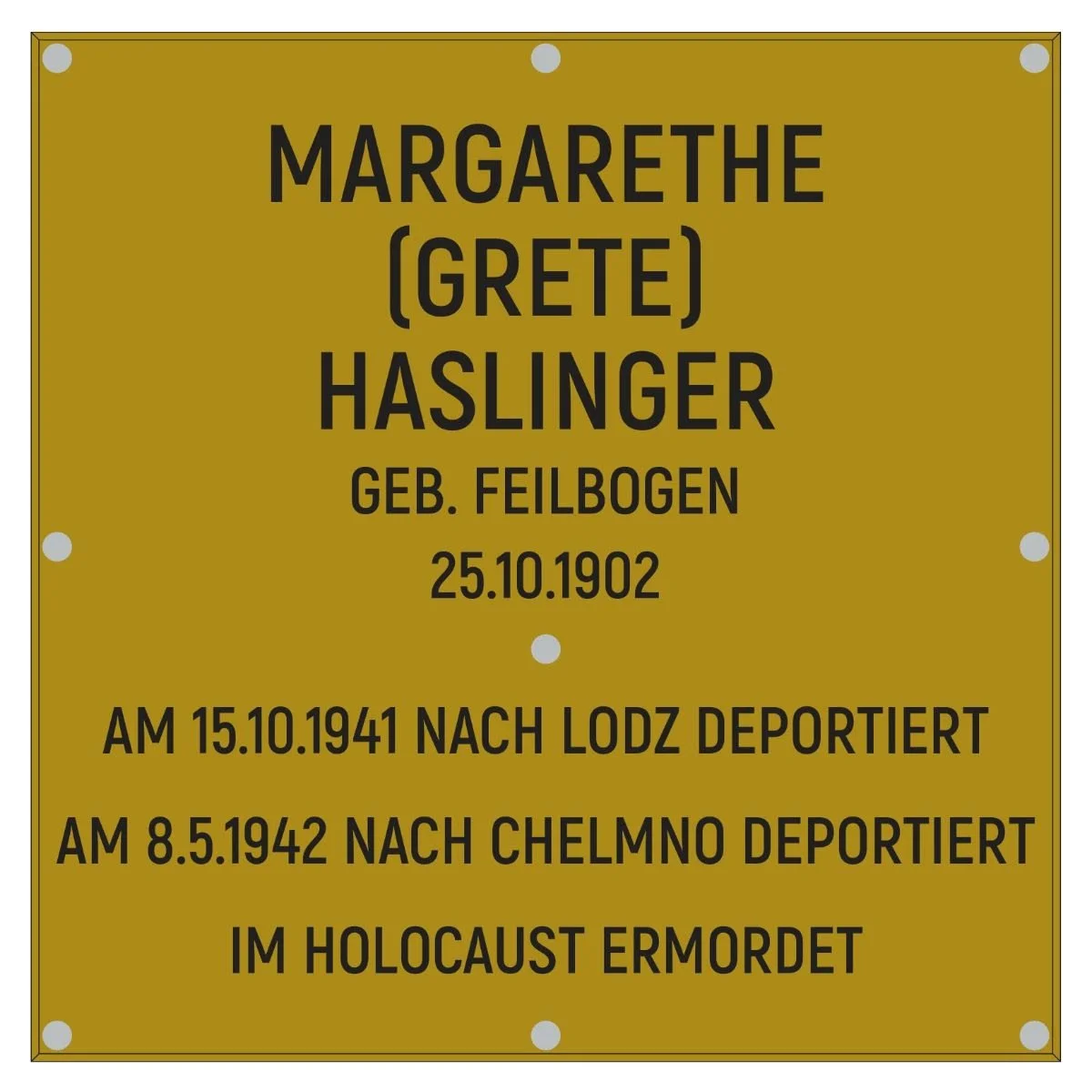
On May 11, 2026, we will honor my great aunt Grete by installing a Stein der Errinerung or Stone or Remembrance at 112 Mariahilfer Straße in Vienna. These small plaques are placed throughout the sidewalks in European cities to commemorate the people who lived there before they were murdered.
Since she has no gravesite, the stone will memorialize Grete’s life cut short. It will be placed at the same address as her mother’s stone which is already there.
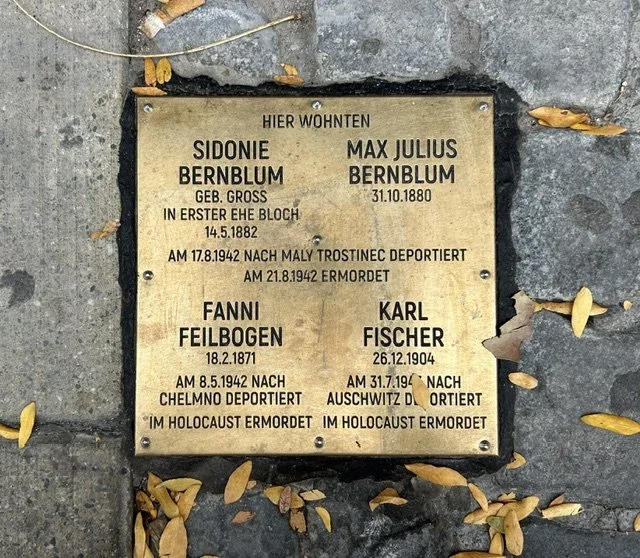
This is the Memory Stone for Grete’s mother, Fanni, my great-grandmother. Karl Fischer was a neighbor. The Bernblums are the relatives of our friend, Liesl Marz.
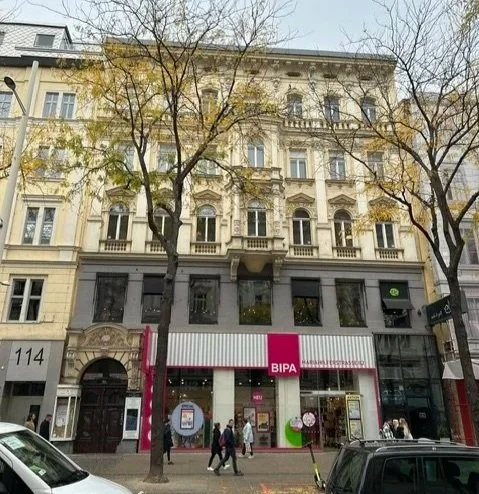
This is the building on Mariahilfe Strasse where the stone is placed. The street became a residential area in the 1500’s but it was used as a thoroughfare by the Romans.
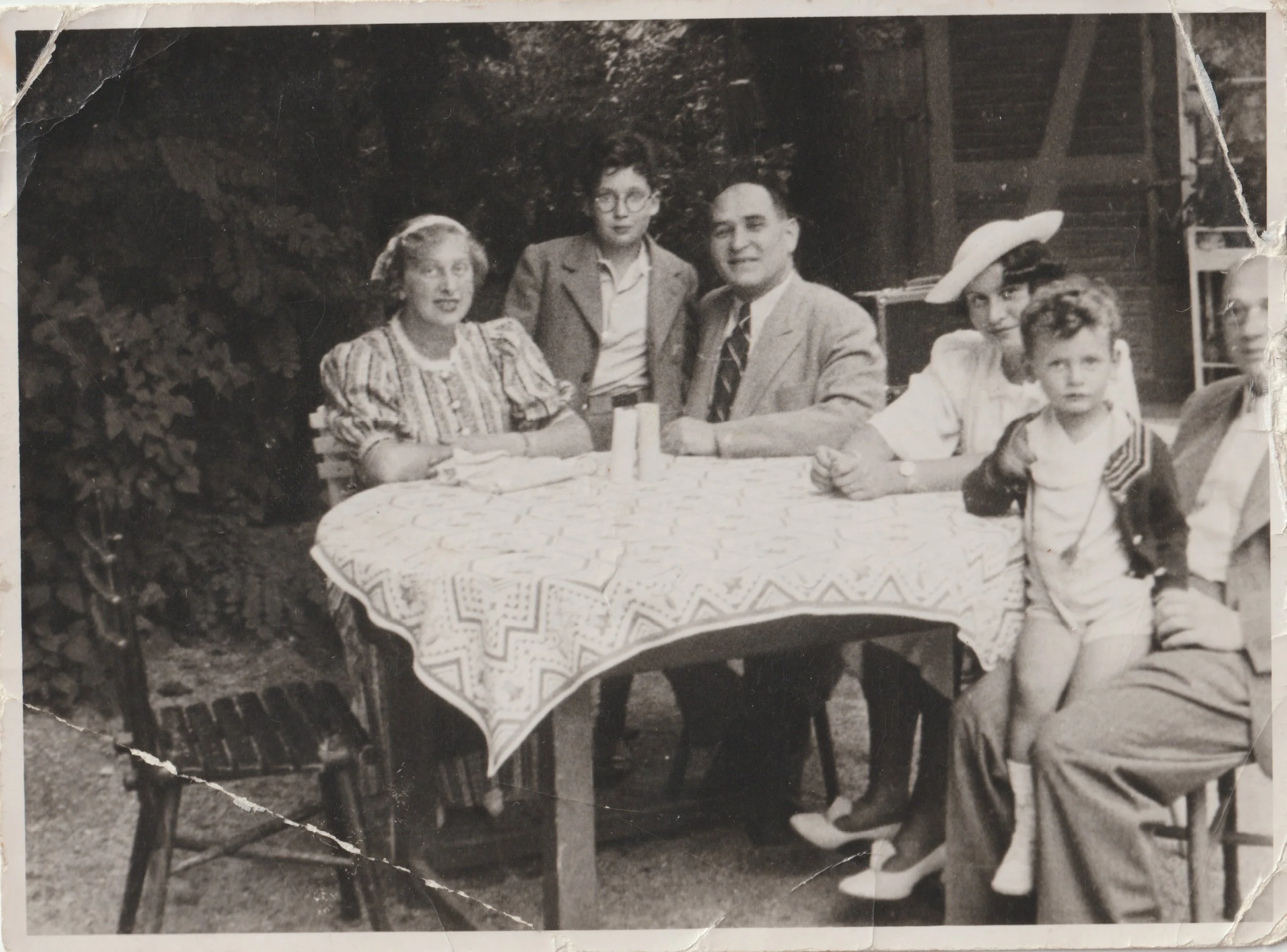
A family photo, yet I can’t be sure who everyone is. From left to right: Grandma Ricky, an unknown boy, possibly uncle Isador Feilbogen, (is the woman in white Grete? or perhaps Isador’s wife?), little boy - my father, Thomas, and his father Grandpa Paul
I have come to care deeply about my ancestral family, the people whose names I did not know until recently, the people who never escaped from Europe. But I feel it would be insincere to talk about their pain and not mention the fact that there are people being murdered at this very moment whose only desire is for their right to exist. My family is as precious as the families of Syria, or Palestine and Iran, and places throughout the globe where conflict persists.
Here is the full text that will be included in the booklet for the ceremony:
Grete Haslinger, Born Feilbogen
Our work today is clear, to unearth history, and more importantly, to reveal a fearless herstory about a beloved family member. Grete Haslinger was my great aunt, and I only learned of her existence recently. She was also our sister, our wife and our daughter, but fundamentally, she was her own person. She was a remarkable woman who lived in an era that did not allow women to live on their own terms, but that did not seem to stop Grete, she did anyway, and in doing so she made the ultimate sacrifice.
Grete Haslinger was born Margarethe Feilbogen in 1902, the only girl to her three older brothers. Her father, Samuel Moses Feilbogen, who descended from a line of prominent rabbis from Moravia, died in 1918 at the age of 55. Her mother, Fanni Feilbogen, born Redlich, and descended from the Royal Court Jew Jakob Singer in Cieszyn, Poland, survived him.
I do not know much about Grete’s early life, where she went to school or if she was trained in an occupation. What we do know is that she was 20 years old when she married Chaim Wolf Schüssler in August 1923 at the Schmalzhofgasse Synagogue, which was once located in the 6th district. Their marriage was brief and they were divorced one year later.
In 1928, Grete married Julius Haslinger and they shared a home at Lindengasse 30, apt. 19, in the 7th district of Vienna. Surprisingly, she also owned a rental property that was in her own name alone located at Frauenfelderplatz 14, in Vienna’s 17th district. This was entirely unusual for the time as women simply did not own property.
Then, the unthinkable happened. The Anschluss and Kristallnacht changed everything. Decisions had to be made, and the family began to disperse. The Feilbogen brothers made their escape out of Austria throughout 1939:
In March of that year, Grete’s brother, my grandfather Paul, along with his wife Regina (Grandma Ricky) and my father Thomas, who was only four-years old at the time, left Vienna for the south of France. It would take them almost three years to reach safety in the United States.
In August, Grete’s brother Robert and his wife Berta left Vienna and traveled to Italy where they were detained in several concentration camps in the south. They eventually reached New York in 1946 with their young son.
Fritz, the oldest brother, left Vienna for Romania in December. There is no known record of what became of him although he appears to have survived the war.
In March of 1940, there is a record that Grete’s husband, Julius Haslinger, attempted to enter Palestine illegally aboard the S.S. Sakaria. He was able to emigrate and died many years later in Israel. Grete did not leave Austria with him.
I have asked myself, why did she not leave with her husband when she had the chance? I have come to the conclusion that when the time came to escape, Margarethe Haslinger born Feilbogen, refused to leave her mother. Fanni Feilbogen was 71 years old and without her daughter she would be left to face the Nazis completely alone. Perhaps Julius begged Grete to leave with him, but his pleas fell on deaf ears. She simply would not.
Grete and Fanni were deported from Vienna on October 15, 1941, to Lodz. On May 8, 1942, they were murdered at Chelmno, a notorious extermination camp that used gas vans to murder victims. It is estimated 200,000 people were killed there.
This is the terrible fate they met together. Fanni was not alone, Grete was always by her side. By being here today, by invoking their names, and installing this stone, we ensure their legacy will endure. We acknowledge Grete for her sacrifice, and we thank her in Fanni’s memory.
It is my honor to tell her story.
Karen Ford,
Great niece to Grete Feilbogen-Haslinger